Category: Balance

  • Portable Office 2026: Building Your Travel-Ready Workspace

    Portable Office 2026: Building Your Travel-Ready Workspace

    Digital nomads in 2026 are proving that with the right gear and setup, the world can be your workplace. The rise of remote work and “work-from-anywhere” culture means a portable office is no longer a luxury. It has become a necessity for anyone hopping between countries or coffee shops. 

    In fact, an estimated 40 million people now live as digital nomads globally. Whether you’re planning your first trip or are a seasoned wanderer, setting up an efficient, lightweight office-on-the-go will keep you productive and comfortable.

    We’ll share practical digital nomad tips for optimizing your portable workspace. From clever gear choices to community-driven hacks, so you can work effectively from Bali beaches, Alpine cabins, or wherever the next adventure takes you.

    2026 Remote Work Trends

    Remote work has exploded into the mainstream by 2026. Over 70 countries now offer special nomad visas for remote workers, and companies big and small have embraced flexible work arrangements. The stereotype of a backpacker coding from a café is evolving. Modern nomads include families and professionals of all ages. 

    Many are opting for longer “slowmad” stays of 3-12 months in one spot to avoid burnout and build routine. With this lifestyle shift, having a reliable portable office setup is more important than ever. Companies recognize that location independence can boost productivity, not hinder it. In short, you’re free to swap the cubicle for a beach or mountain lodge, but you’ll need the right tools to stay productive on the move.

    Crucially, technology has caught up to nomadic needs. Connectivity is less of a limiting factor now – global eSIMs, multi-carrier hotspots, and even satellite internet options (like Starlink) keep you online from virtually anywhere. This means your portable office can function on a remote island or a national park, not just in city centers. Likewise, the ecosystem of gear tailored to mobile workers has boomed. Ergonomic portable laptop desk solutions, compact monitors, and noise-canceling tech are making “working from anywhere” far more comfortable than it was a few years ago. 

    A recent 2025 report put it well: ubiquitous high-speed internet and powerful mobile devices have essentially put “the world’s office in your backpack”.

    Portable Office Gear Essentials

    Staying productive on the road starts with packing the right gear. You’ll want to balance lightweight and compact with comfort and functionality. Here are the portable office essentials that experienced nomads and community forums recommend:

    • Ergonomic Laptop Stand (Portable Laptop Desk)

    Hunching over a laptop all day can wreak havoc on your neck and back. A lightweight folding laptop stand (sometimes called a portable laptop desk) will elevate your screen to eye level for better posture. 

    Popular options in the nomad community include the Roost Stand and Nexstand. The Nexstand riser weighs only 8 ounces but can raise your laptop to a proper height. Another clever choice is the MOFT Z foldable desk, which is under 1 lb and folds flat like a magazine. Despite its slim profile, the MOFT Z can prop your device at multiple angles (even a standing height) and support up to 22 lbs. 

    • Secondary Monitor for Multitasking

    If you’re used to dual monitors at home, you’ll be thrilled to know you can carry that convenience with you. Slim portable monitors have become widely available and travel-friendly. Look for a 14-16″ lightweight screen (3 pounds or less) that connects via a single USB-C cable for power and display. For example, the Arzopa S1 is a 15.6″ Full HD portable monitor that’s thinner than a notebook. 

    Asus’s ZenScreen and the Lepow 15.6″ are also popular choices. Some enterprising nomads even go for triple-screen laptop setups – yes, some gadgets attach two extra screens to your laptop for a full cockpit of displays! (You may catch YouTube creators showing off these wild portable desk setups.) For most, a single portable monitor is a game-changer for productivity, letting you run spreadsheets on one screen and video chat or code on the other. 

    • Power Solutions (Chargers and Batteries)

    Working from different locations each day means you can’t always bet on finding an outlet. A high-capacity power bank is a must-have for keeping your laptop and phone charged during long work sessions or flights. Aim for 10,000-20,000 mAh with USB-C Power Delivery support for fast charging. This will reliably top up a laptop or multiple smaller devices. Brands like Anker make 20,000+ mAh banks that can even handle power-hungry MacBooks. Also, consider carrying a compact travel power strip or plug adapter if you’re visiting countries with different electrical outlet types.

    • Connectivity and Internet Tools

    Ask any remote worker about their number-one concern, and you’ll hear “Wi-Fi!” Reliable internet is the lifeblood of a portable office. Luckily, staying connected in 2026 is easier than ever. Always have a plan A, B, and C for the internet:

    • Plan A – Use local Wi-Fi at coworking spaces, cafes, or your accommodation. Many Airbnb hosts now advertise high-speed Wi-Fi, and coworking hubs around the world cater to nomads needing solid internet.
    • Plan B – Carry your own mobile data. An unlocked mobile hotspot (MiFi) with a local SIM or an international eSIM can save your bacon when Wi-Fi is slow or nonexistent. Multi-network hotspots that auto-switch between carriers are ideal for country-hopping. Some services offer eSIM packages covering dozens of countries.
    • Plan C – Satellite internet for extreme cases. If you plan to work from truly remote areas, consider something like Starlink Roam, which can deliver broadband via satellite. It’s pricey and bulky, so this is overkill for most people, but it’s a game-changer for those who really roam off-grid.

    Coworking, Habits, and Workspace Hacks on the Road

    Gear is only half the equation. The other half is how and where you use it. The digital nomad community has learned a lot about optimizing work habits away from a traditional office. 

    One key tip is to leverage coworking spaces wherever possible. Coworking hubs in cities like Mexico City, Lisbon, or Chiang Mai not only provide reliable desks and Wi-Fi, but also a ready-made community to plug into (antidote to the loneliness of solo travel). Many nomads mix up their week with a few days at coworking spaces for structure and networking, and other days working from “home” (hotel/Airbnb) or interesting public spots for variety. This balance can keep you productive and inspired.

    When working from an Airbnb or hotel room, take a few minutes to set up an ergonomic nook. Prop your laptop on that portable stand, plug into an external keyboard if you have one, and use a chair with back support (even if it means piling pillows behind you). If you must work from bed or a couch occasionally, a foldable lap desk can create a stable surface and help avoid the dreaded hunch. (Nomads in RVs and vans swear by these lap desks. They’re lightweight and stash easily.) 

    Another habit to cultivate is a consistent routine, even as your scenery changes. It might sound boring, but having set “office hours” or a morning ritual can anchor your day amidst the travel chaos. Maybe that means always starting work at 9 am after a walk, regardless of time zone. 

    Routines help maintain productivity on the road and keep work from bleeding into vacation mode entirely. On the flip side, remember to take advantage of your freedom – schedule breaks to explore your new locale. The beauty of a portable office is that you can close the laptop and be on a hiking trail or city tour in minutes. Just plan your workload around those adventures (procrastination is a bigger risk when nobody’s looking over your shoulder).

    Lastly, stay safe and savvy out there. Keep an eye on your belongings in public spaces; a laptop lock can secure your device if you need a bathroom break at a cafe. Use cloud backups or an external drive so your files are safe even if a device is lost or stolen. And tap into online communities for digital nomad tips on your destination. Often you’ll find a goldmine of info on the best SIM card to buy, which cafés have the strongest Wi-Fi, or where to rent a desk with a monitor. Nomad Facebook groups, subreddits like r/digitalnomad, and Nomad List forums are excellent resources to get the inside scoop on a location before you arrive.

    Final Thoughts

    Building a great portable office setup is a one-time effort that pays off every day. With a bit of planning and the right gear, you really can be effective from anywhere. One day it might be a coworking hub in a bustling city, the next day a hammock by the beach. 

    The key is finding the right balance between your tech, environment, and daily routine. Gear up, stay flexible, and embrace the freedom. Your next workstation could be under a palm tree or on a mountain vista, and with the tips above, you will be ready to get real work done from there. Safe travels and happy working.

    Subscribe to What Works Next today and join a community dedicated to transforming the way we work. Working smarter starts here!


  • Biophilic Home Offices: Why Greenery Isn’t Just Decoration in 2026

    Biophilic Home Offices: Why Greenery Isn’t Just Decoration in 2026

    If you think home office plants are just “cute background for Zoom,” 2026 is going to change your mind. People now treat the home office like a daily performance space, not a temporary corner. They want calmer nerves, better focus, and a setup that feels human. 

    Greenery fits that demand because it nudges your brain toward safety, softness, and steady attention. And yes, the internet has opinions, but the science and trends now align in a way that makes plants feel less like decor and more like a strategy. 

    The 2026 Vibe Shift and Why We Stopped Optimizing for “Aesthetic”

    Take a look at what people share online, and you will notice a pattern for home office plants followed by cozy desks, warm lighting, real textures, and plants everywhere. Homes in 2026 trend toward “joy-first” design, with more personalization and intentional corners that support mood and calm. That includes work corners.

    This shift also connects to the bigger work story. Hybrid work and wellbeing now sit in the same conversation, and anxiety about harsh return-to-office policies keeps showing up in polls and headlines. When work feels uncertain, people try to control what they can. They start with the space in front of them.

    What Biophilic Design Does to Your Brain

    Biophilic design means you bring nature cues into built spaces. Think plants, daylight, natural materials, and views of greenery. The point is not “pretty.” The point is regulation.

    Here is the simple human mechanism:

    • Your brain gets exhausted. Screens, tabs, notifications, and tight deadlines drain it all.
    • Nature cues and surroundings help in restoring it. Even short glimpses of “plants” within your working area can feel less demanding than digital stimuli.
    • Your body downshifts. Stress drops when the environment feels safer and less sterile.

    A 2024 study in Scientific Reports explored how nature exposure in workplaces connects with wellbeing, with vigor playing a role in the pathway. In short, nature cues can support the energy you need to show up as your best self. 

    The Productivity Angle People Love 

    Let’s talk outcomes, because your calendar does not care about vibes.

    A University of Exeter research report widely cited from a real office field study found that adding plants to previously “lean” offices was linked with a 15% productivity increase. That is huge because it reframes greenery as performance support, not decoration.

    Now, your home office is not a corporate floor plan. Still, the principle travels well: when you add living elements, you reduce “mental friction” and make it easier to settle into work.

    This is also why a wellness workspace trend keeps expanding. People do not want a room that looks like a laptop storage unit. They want a room that helps them think.

    The Air Quality Myth

    Plants and air quality have a messy internet history.

    • NASA’s older research showed plants can remove certain chemicals in controlled settings.
    • But a later review and analysis found that typical potted plants do not meaningfully clean indoor air in normal buildings unless you use an unrealistic number of plants per area.

    So what should you do with that?

    Use plants for psychology, comfort, and attention. Use ventilation and filtration for air. When you separate these jobs, you win twice: you get the emotional benefits of greenery without expecting a jungle to replace an HVAC system.

    Community Dialogue

    If you read home office plant threads, you will see the same arc:

    1. “Look at my leafy desk sanctuary.”
    2. “Wait, how do I keep them alive while I work 10-hour days?”
    3. “Do I actually feel better, or do I just like how it looks?”

    That tension matters because a plant setup only works if it stays easy. People do not quit plants because they hate nature. They quit because their setup creates guilt. You want the opposite: plants that reward you fast and forgive you when life gets busy. 

    The 2026 Playbook

    If you want a real productivity boost, treat your plants like part of your workflow design.

    1. Use “visual anchors” to reduce screen fatigue

    Put one medium plant in your primary line of sight, but not blocking the monitor. Your eyes need a resting point that feels alive. This tiny change can lower the urge to tab-hop.

    Where it works best:

    • next to your main monitor.
    • behind your laptop at a slight angle.
    • near a window, so the plant looks more vivid.
    • Or as you may like it.

    2. Build a two-plant routine, not a twenty-plant fantasy!

    Start with two plants you can keep alive. Earn your way up.

    A simple rule:

    • One “I forgive you” plant (could be a low-maintenance one)
    • One “I make you happy” plant (the one that you resonate with and can take care of like your own daily)

    That combo keeps your wellness workspace feeling alive without turning care into a second job.

    3. Pair plants with light, not with willpower

    Plants struggle in dark corners. Humans struggle in dark corners, too. In 2026, home wellbeing trends keep pushing better lighting and calmer zones, because light changes mood fast.

    If your desk has low natural light:

    • Move the plant closer to the window.
    • Or choose plants that tolerate shade better.
    • Or add a simple grow light on a timer.

    4. Design “micro-breaks” around care

    Plant care can become a ritual that interrupts stress spirals. You can water or mist during your first break, not at night. It turns plant care into a reset and helps you return to work calmer. This is a sneaky, reliable productivity boost because it reduces the chance you grind through fatigue.

    Final Thoughts

    If you want a home office that supports your brain, your mood, and your consistency, do not treat greenery as an accessory.

    Treat it as part of your environment’s nervous system. Add plants that feel easy to keep, place them where your eyes naturally rest, and let them turn your desk into a space that gives something back.

    In 2026, home office plants will not just decorate your workday. They will shape it!

    Subscribe to What Works Next today and join a community dedicated to transforming the way we work. Working smarter starts here!
  • How to Manage Working From Home With Kids Smoothly

    How to Manage Working From Home With Kids Smoothly

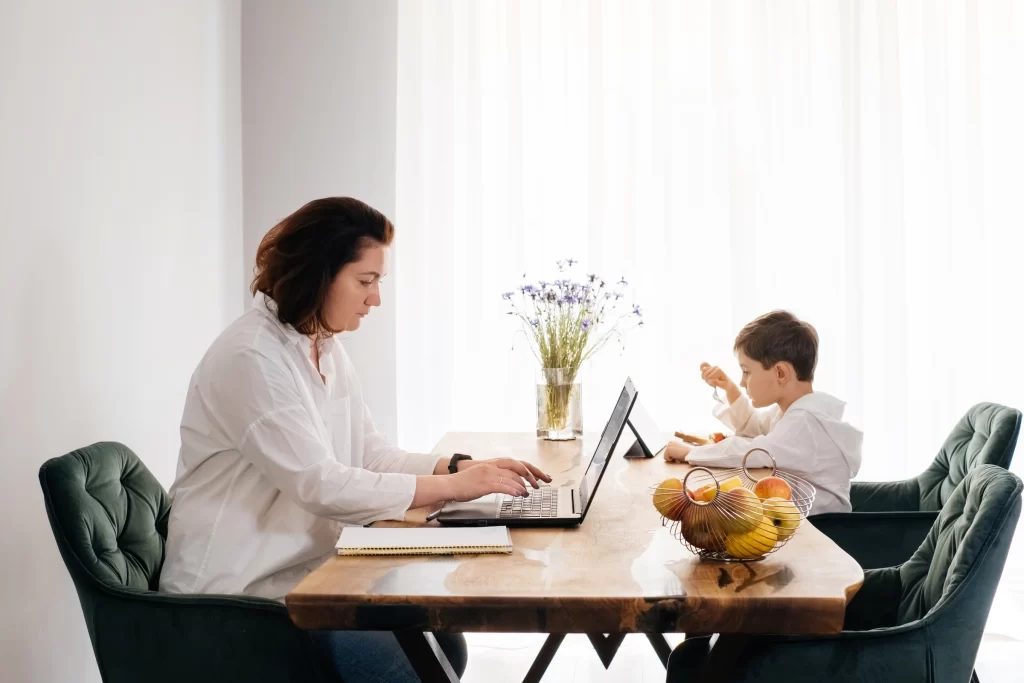
    Working from home with kids can be both rewarding and overwhelming. You’re trying to attend meetings, respond to emails, and meet deadlines, all while navigating snacks, sibling disputes, and background noise. The truth is, working from home with kids requires more than just multitasking. It takes strategy, patience, and flexibility.

    I have jotted down this guide to help you strike a balance between productivity and parenting, offering actionable tips, smart setups like a portable office, and useful tools, such as an adjustable laptop stand. 

    Whether you’re working remotely full-time or managing a hybrid schedule, these strategies will surely help you stay on track without sacrificing your sanity.

    Set Realistic Expectations from the Start

    One of the first steps to working from home with kids is managing your expectations. You won’t always get everything done, and that’s okay. Some days will feel smooth, others chaotic. Setting realistic goals helps reduce stress.

    Start by identifying your must-do tasks each day. Then, be flexible about how and when you’ll complete them. For example, if your toddler naps at 1 PM, plan your focused work around that time. You may also need to work early in the morning or after bedtime.

    Talk openly with your team about your situation. Transparency helps manage workloads and deadlines. Most colleagues will appreciate your honesty and adjust accordingly.

    Create a Dedicated Portable Office Space

    When your workspace doubles as your dining table or couch, things get messy fast. Having a portable office setup allows you to move around the house with ease while keeping your essentials together.

    Use a compact storage bin, rolling cart, or bag to carry your laptop, notepad, pens, and chargers. This helps you transition smoothly between locations, whether you’re working in the kitchen during breakfast or moving to the bedroom for quiet.

    A portable office not only adds flexibility but also helps kids understand when you’re “at work.” When they see your setup, they’ll gradually learn it’s time to let you focus.

    Use an Adjustable Laptop Stand for Comfort

    Comfort is key when you’re working long hours from home. An adjustable laptop stand makes a big difference in your posture and productivity. It helps elevate your screen to eye level, reducing neck and back strain.

    You can easily place the stand on any surface, from your kitchen counter to your bedside table. If your kids are playing in the living room, move there with your laptop stand and stay productive while keeping an eye on them.

    This tool is especially helpful when you can’t dedicate one desk space. It lets you create a mini workstation wherever you are.

    Build a Flexible Routine That Includes the Kids

    Kids thrive on routine, but so do parents. The key is flexibility. Create a general schedule that includes your work hours, playtime, meals, and screen time. Share this plan with your kids in simple terms.

    For example, you can say, “When the big hand is on the 12, I’ll play with you.” Visual cues like timers or colorful calendars work great for younger kids.

    Having a structure helps kids know what to expect. It also gives you blocks of time to focus. Try including your children in the planning process. Letting them choose activities makes them more engaged and cooperative.

    Plan Your Day Around High-Energy and Low-Energy Times

    Observe your kids’ energy levels. Are they more active in the morning? Do they get tired in the afternoon? Align your work schedule with these patterns.

    Use quieter times for deep work. During high-energy moments, schedule lighter tasks or take short breaks to engage with your kids. You’ll avoid frustration and maintain a better work-life flow.

    If you’re lucky enough to have help from a partner or family member, alternate shifts to manage the load. Divide responsibilities so you each get dedicated work windows.

    Create a Backup Activity Box

    You won’t always have time to entertain your children. That’s why a backup activity box is a lifesaver. Fill it with puzzles, books, sticker sets, or art supplies. These should be activities they can enjoy independently.

    Introduce this box only during your work blocks. It becomes a special treat and keeps their interest high. Rotate items weekly to keep them fresh and exciting.

    Older kids can work on homework or have quiet reading time. For toddlers, try simple games or educational apps. Just ensure screen time is balanced with other creative play.

    Set Boundaries Without Guilt

    It’s tempting to drop everything when your child calls for you, but setting boundaries is necessary. Use clear but gentle language like, “I’m working right now, but I’ll be with you in 15 minutes.”

    You can also create visual cues. A colored sign on your door or desk can signal when you’re available. For younger kids, use gestures or stickers to make it fun.

    Boundaries help children understand your work needs without feeling rejected. Over time, they’ll respect these limits and learn patience.

    Embrace Screen Time Strategically

    Not all screen time is bad. Educational shows or interactive apps can be engaging and beneficial. The key is to use screen time with intention.

    Schedule short periods during your important calls or deadlines. Choose quality content and discuss it with your kids afterward to stay involved.

    Pairing screen time with snacks or quiet time can also help create a calm window for focused work. Just remember to follow it with physical play or connection time.

    Take Advantage of Nap Time and Quiet Time

    If you have younger children, nap time is your golden hour. Use it wisely. Prioritize tasks that require the most focus. Avoid doing chores during this time unless absolutely necessary.

    For older kids who no longer nap, introduce quiet time. This could include audiobooks, puzzles, or quiet crafts. It trains them to enjoy independent time while you stay productive.

    Be consistent with nap or quiet time each day. Even 30 – 60 minutes of silence can reset your energy and help you catch up.

    Accept That Interruptions Will Happen

    You might be in the middle of a Zoom call when someone spills juice or cries for help. It’s okay. These moments are part of the reality of working from home with kids.

    Rather than stress over perfection, embrace the mess. Most colleagues are understanding, especially post-pandemic. If your child shows up on camera, smile and carry on.

    The more you normalize interruptions, the less anxiety they cause. Plan around them when possible, but don’t let them derail your day.

    Prioritize Self-Care and Short Breaks

    You cannot pour from an empty cup. Caring for your own well-being is just as important as meeting deadlines. Take short breaks between tasks. Stretch, hydrate, breathe, or step outside.

    Working from home with kids often leads to skipped meals and scattered thoughts. A quick five-minute reset can help you return more focused.

    If possible, reserve a small corner just for you. Even a quiet reading chair or candle-lit nook helps create boundaries between work, parenting, and rest.

    Communicate With Your Partner or Support System

    If you’re not doing this alone, communication is everything. Share your schedules, work priorities, and challenges. Tag-team where possible. Maybe one of you handles mornings while the other covers afternoons.

    If you have no in-home support, reach out to friends or family for help. Even a 20-minute virtual call with grandma can entertain the kids while you tackle a task.

    Don’t be afraid to ask for support. No one expects you to juggle it all alone.

    Reflect and Adjust Weekly

    Every family is different. What works for one household may not work for yours. That’s why it’s important to reflect each week. Ask yourself: What worked well? What felt stressful? What can we tweak?

    Make it a Sunday ritual. Adjust schedules, activity boxes, and expectations accordingly. When you stay flexible and responsive, your family finds its own rhythm.

    Progress will not be perfect, but each week brings more insight and ease.

    Final Thoughts

    Working from home with kids is a unique challenge, but it’s not impossible. With the right tools like a portable office and an adjustable laptop stand, a flexible routine, and realistic expectations, you can find your flow.

    Some days will feel chaotic, others surprisingly peaceful. But with intention, structure, and self-compassion, you’ll create a system that works for your family.

    And remember every small win counts. A completed task, a calm call, or even a shared snack break are all signs you’re doing just fine.

    Subscribe to What Works Next today and join a community dedicated to transforming the way we work. Working smarter starts here!

  • How To Semi Retire and Find Meaningful Work that Pays

    How To Semi Retire and Find Meaningful Work that Pays

    Becoming semi retired does not mean you stop working or give up on your future work plans. Instead, you can shift into a more balanced and purposeful work that is lower in stress yet still pays well. 

    Whether you want to become semi retired soon or you have already started that path, we have compiled this guide to help you find meaningful work that fits your vision. You will learn how to work remotely and how to transition to freelancing and secure low-stress jobs that pay well. All of this is about balance, fulfillment, and financial stability. Let’s scrap the floor!

    What Does It Mean to Become Semi Retired

    To become semi retired, you choose to reduce your workload and align your career with what matters the most to you. You do not retire completely. You find roles that allow time for family hobbies, travel, and rest. Many take part-time positions or do freelancing and remote work that fits their rhythms. Semi retirement lets you pursue meaningful work while avoiding the pressure of a full-time job.

    Benefits of semi retiring include:

    • You maintain a flow of other income streams and a sane routine
    • You reduce stress and support your mental wellbeing
    • You stay connected and contribute to yourself and the community
    • You make space for loved ones, creativity, and rest without feeling burned out 

    Why Find Meaningful Work

    When you find meaningful work, it goes far beyond a paycheck. It gives you value and inspiration even with fewer hours. Research shows that purpose and social connection support well-being. Meaningful work can help you maintain identity, mental clarity, avoid burnout, set flexible routines that align with your current life stage, and offer chances to learn, create, and grow. Semi retirement gives you breathing room to find meaningful work and shape it around your priorities rather than settle for just any job.

    Your Semi Retired Work Options

    Below are several paths you can take to find meaningful work while becoming semi-retired, either by freelancing for remote roles or low-stress jobs that pay well.

    1. Part-Time and Consulting Roles

    You can stay in your field while working fewer hours. You might:

    • Request part-time hours
    • Offer consulting on projects
    • Transition into support or training roles

    These can often be done remotely and still count as meaningful work while offering structured income and purpose without full-time demands.

    2. Freelancing

    Freelancing is a clear path to become semi retired and find meaningful work that aligns with your pace. You can:

    • Set your own schedule
    • Select projects that matter to you
    • Work remotely from wherever you choose

    Research from Toptal shows that ongoing engagement in meaningful work offers financial benefits and improved health for people over sixty. To start, you define your services, build a portfolio, pitch to clients, set clear agreements, and focus on meaningful and profitable projects. This is a way to find meaningful work and enjoy low-stress jobs that pay well while staying in control of your work life.

    3. Remote Low-Stress Jobs That Pay Well

    If freelancing feels unstable, you can aim for structured roles that allow remote work and low stress. Top roles include content editing, customer service via chat, virtual assistance, tutoring, grant writing, and more. MyPerfectResume lists 15 high-paying, low-stress remote jobs based on Bureau of Labor Statistics data. Coursera and Nasdaq list data scientist, actuary, environmental economist, mathematician, astronomer, and computer systems analyst as both low-stress and well-paid. These roles let you stay steadily connected and meaningful without high pressure.

    4. Volunteering and Civic Engagement

    For many, meaningful work means giving back. You can:

    • Mentor others
    • Tutor online
    • Serve as an advisor for nonprofits
    • Join boards or support community projects

    Some roles pay modestly and allow for remote and part-time setups. These are deeply satisfying and help you stay connected to your purpose.

    5. Sabbaticals and Exploration

    You might need a break before committing to a new path. Use a sabbatical to travel, learn, rest,  or volunteer. Then return refreshed, ready to find meaningful work through freelancing, part-time roles, or volunteer engagements.

    How to Get Started

    Here is a step-by-step roadmap for becoming semi retired and finding meaningful work:

    1. Clarify your vision by deciding how many hours you want to work weekly, what impact you seek, where you will work, and the income you need.
    2. Assess your strengths from professional skills to hobbies and soft skills like empathy, communication, and planning.
    3. Explore your options by browsing platforms like Upwork, FlexJobs, Remote dot co, and Virtual Vocations, and by talking to your contacts or community. Focus on roles that offer remote work, low stress, and value.
    4. Build a basic portfolio with a strong resume, a few project samples, and a one-page overview of your services.
    5. Set up a daily routine for freelancing or consulting. Use contracts to outline expectations, milestones, and payment terms. Stay organized with tools like Trello, Asana, or Notion. Schedule time for both work and rest.
    6. Keep stress low by saying no to draining work, blocking rest time, and automating tasks like billing taxes and scheduling.

    Real Life Examples

    • An IT leader now does fractional consulting on infrastructure and system architecture projects for two or three days a week. He schedules everything remotely and chooses clients whose missions inspire him.
    • A marketing executive now freelances on campaign strategy and content editing work from home, focusing on clients that align with her values.
    • A finance professional does part-time bookkeeping for local nonprofits from her home, reducing stress and increasing satisfaction in her later years.

    Each person has found a way to become semi retired, find meaningful work, and remain financially supported.

    Another example of remote work illustrating both opportunity and caution involves a millennial who held three remote jobs and earned over half a million dollars a year. He used the extra income for renovating and investing, but ultimately quit one job due to its commute requirement and later rebalanced his commitments for sustainability. This story reminds us that remote work flexibility can empower people, but it must be managed to avoid burnout.

    Benefits of Becoming Semi Retired and Finding Meaningful Work

    • You gain space for family creativity, rest, and hobbies while remaining productive.
    • You stay socially engaged and keep your mind active, which promotes emotional well-being.
    • You maintain income and can contribute to retirement savings or delay Social Security if that benefits your future financial health.
    • You choose where and when you work.
    • You share wisdom, mentoring, or volunteering, helping create a legacy.

    Challenges and How to Handle Them

    Income can be inconsistent. You may need a buffer or a mix of income sources. You may need your favorite tools to connect with others through local groups or virtual communities. Your work identity may shift. You might find this easier if you phase out full-time work gradually or test hybrid paths. You may need to learn new skills or refresh your resume to make transitions. Small courses or workshops can help with that.

    Advanced Strategies to Maximize This Transition

    Unretirement or encore careers can offer ways to stay engaged without stress. You may work part-time while coaching or consulting. You might combine consulting, volunteer board membership, and short, engaging freelance assignments to build varied and meaningful weeks.

    Final Thoughts

    To become semi-retired and find meaningful work that pays you, begin with clarity about what matters most. Build on your strengths, explore roles that align with your rhythms and energies, and shape work to support your wellbeing. 

    Whether you choose remote freelancing part-time structured work, or volunteering, the path is yours to design. You do not need to stop working to live with purpose and ease. With intention balance and courage, you can create a semi retired life that is deeply meaningful.

    Subscribe to WhatWorksNext today and join a community dedicated to transforming the way we work. Working smarter starts here!

  • No-Work Rule After 6 PM?  How It Changes Your Life

    No-Work Rule After 6 PM? How It Changes Your Life

    Do you often find yourself replying to work from home emails late at night, or scrolling through Slack messages while eating dinner? In today’s always-connected world, it’s easy to blur the lines between work and personal life. The idea of a No-Work Rule After 6 PM might sound radical, but for many, it’s becoming a necessary shift—a conscious decision to prioritize mental health, relationships, and overall well-being.

    Let’s dive into five reasons why setting boundaries after work isn’t just good for you—it’s essential.

    1 – Reduces Stress and Prevents Burnout

    Reduces Stress and Prevents Burnout

    When your day never really ends, and your work from home routine stretches late into the evening, it leads to chronic stress and burnout.

    Constant notifications, emails, and “quick tasks” prevent your brain and body from resting. By setting a clear boundary and ending your workday at 6 PM, you allow yourself the mental and physical space to unwind. No-Work Rule After 6 PM, this separation between work and personal life is essential for reducing anxiety and promoting overall mental health. Rest is not a luxury – it’s a necessity.

    2. Enhances Productivity During Work Hours

    enhance productivity during work hours

    A defined end to your workday creates a sense of urgency and focus. Knowing you need to wrap up by 6 PM encourages you to prioritize tasks, avoid procrastination, and manage time more effectively. This leads to higher productivity during working hours and helps you leave the day feeling accomplished. Plus, once the clock strikes 6 PM, you can fully disconnect without guilt, knowing you’ve made the most of your working time. 

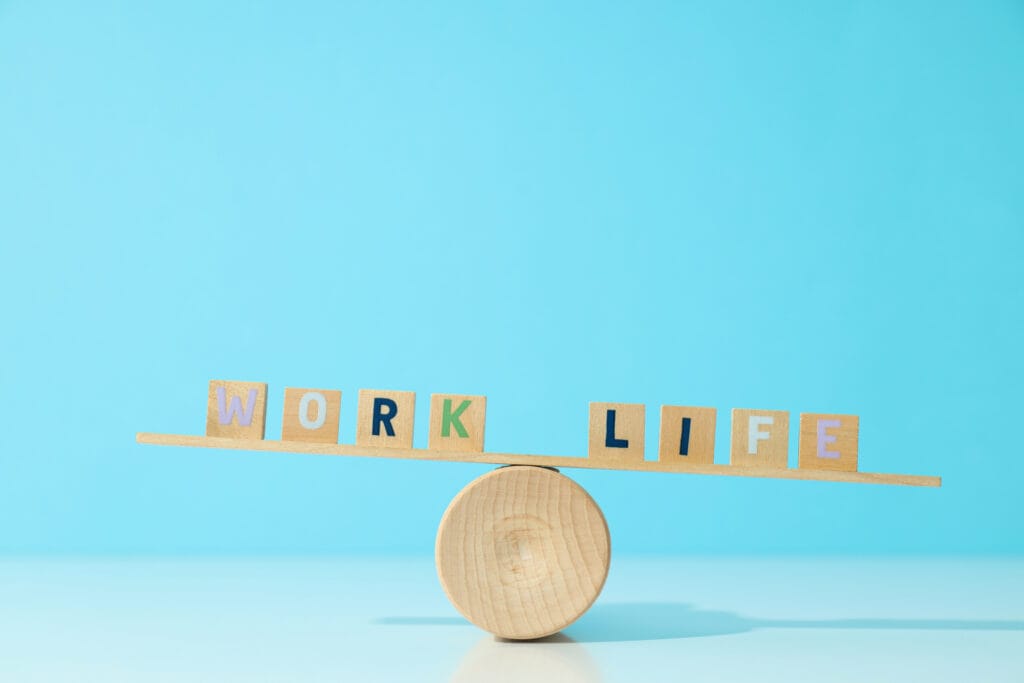
    3. Improves Work-Life Balance

    Improve Work-Life Balance

    It’s easy to think everything’s urgent, but the reality is that much of it can wait until tomorrow. Setting boundaries allows you to carve out evenings for relaxation, hobbies, family, and self-care. This balance is vital for long-term well-being, especially when navigating the unique challenges of remote work.

    Without clear boundaries, the risk of burnout increases, but with them, you can enjoy both professional success and a fulfilling personal life.

    4. Strengthens Personal Relationships

    Strengthens Personal Relationships

    When you’re fully present in the evening, you can deepen your connections with family and friends. This presence “free from work distractions” creates stronger bonds, better communication, and more meaningful interactions. Whether it’s sharing a meal, having a conversation, or just being there, these moments matter. Boundaries signal to others that they’re a priority, which builds trust and strengthens relationships. Even amidst remote work challenges, personal connections remain a cornerstone of well-being.

    5. Promotes Better Sleep and Health

    Promotes Better Sleep and Health

    Working late into the night disrupts natural sleep patterns, leading to fatigue and reduced cognitive performance the next day. By stopping work at 6 PM, you give your body and mind the chance to transition into rest mode. This leads to higher-quality sleep, better health, and greater overall resilience. Whether you’re tackling tasks at a bustling office or navigating your home office setup, rest is the key to showing up refreshed and ready to focus.

    How to Implement the No-Work Rule After 6 PM?

    • Communicate Your Boundaries: Let your team, colleagues, or clients know your working hours. Setting clear expectations reduces after-hours interruptions.
    • Use Tools to Support Boundaries: Activate “Do Not Disturb” modes on your devices. Calendar blocks can reinforce your personal time.
    • Create a Shutdown Ritual: Close your laptop, organize your home office setup, and mentally switch off from work mode.
    • Stand Firm Against Pressure: It’s tempting to check that one last email or reply to a late message. But holding your boundary—even in the face of remote work challenges—is essential. Remember, boundaries are a form of self-respect and a key to sustainable success.

    Final Thoughts About No-Work Rule After 6 PM

    Adopting a “No-Work Rule After 6 PM” isn’t just about ending the workday; it’s about reclaiming time for yourself, your health, and your relationships. By doing so, you’re not only creating a better balance but also inspiring those around you to do the same. It’s a commitment to working smarter, living better, and embracing the future of work.

  • 10 Simple Desk Exercises to Stay Active While Working

    10 Simple Desk Exercises to Stay Active While Working

    If you’re like me and spend most of your day glued to a chair, it’s easy to forget your body needs movement to thrive. That’s where desk exercises to stay active come in. And it’s essential to have small breaks and some sort of easy stretching and exercising, otherwise you’ll become a dead dummy.

    These simple, effective movements help counteract the stiffness and fatigue that comes as an extra treat while working long hours at a desk.

    From boosting blood circulation to keeping your muscles engaged, these small desk exercises to stay active can make a big difference in how you feel, think, and work.

    Simple Desk Exercises To Stay Active

    Here is the list of some desk exercises to stay active which you have to add into your life to make your life dreamful.

    1. Seated Torso Twist

    Desk Exercises to Stay Active

    This is my go-to move when I feel my back stiffening up. Sit upright in your chair, feet flat on the floor, and gently twist your torso to the right, grabbing the back of your chair with your right hand. Hold for 10–15 seconds, breathing deeply, then switch to the other side. 

    It’s a great stretch for your spine and lower back, two areas that often suffer during long hours of a desk job. It sneaks in a quick break for your brain, too.

    2. Wrist Rolls and Finger Stretches

    Wrist Rolls and Finger Stretches

    Typing all day can turn your hands into little stiff claws, and sometimes it hurts. I’ve been there (quite a few times). 

    To tackle it, stretch your fingers wide, hold for 5 seconds, then make a tight fist. Repeat a few times. Follow that with gentle wrist rolls in both directions. These desk exercises to stay active help maintain flexibility, reduce stiffness, and may help prevent carpal tunnel.

    I like doing them during loading screens or right before typing marathons. It’s low effort but very effective for keeping your hands and wrists pain-free. Gotta take care of your joints before anything else!

    3. Desk Push-Ups

    Desk Push-Ups

    No gym? No problem. Stand at arm’s length from your desk, place your hands on the edge, and lower your chest toward the desk, then push back up. You’ve just done a desk push-up! Btw, you don’t have to do 3-3 sets; just 4-6 push-ups would be enough to unstiffen your body.

    These are great for your chest, shoulders, and triceps, and they get your heart rate up a little, too. 

    If you’re wondering how to stay fit with a desk job, adding desk exercises to stay active into your routine once or twice a day is a great place to start. Plus, it’s kind of fun! 

    Work will never end, but you may! So, make sure to take some time from your busy routine to do these quick desk exercises to stay active.

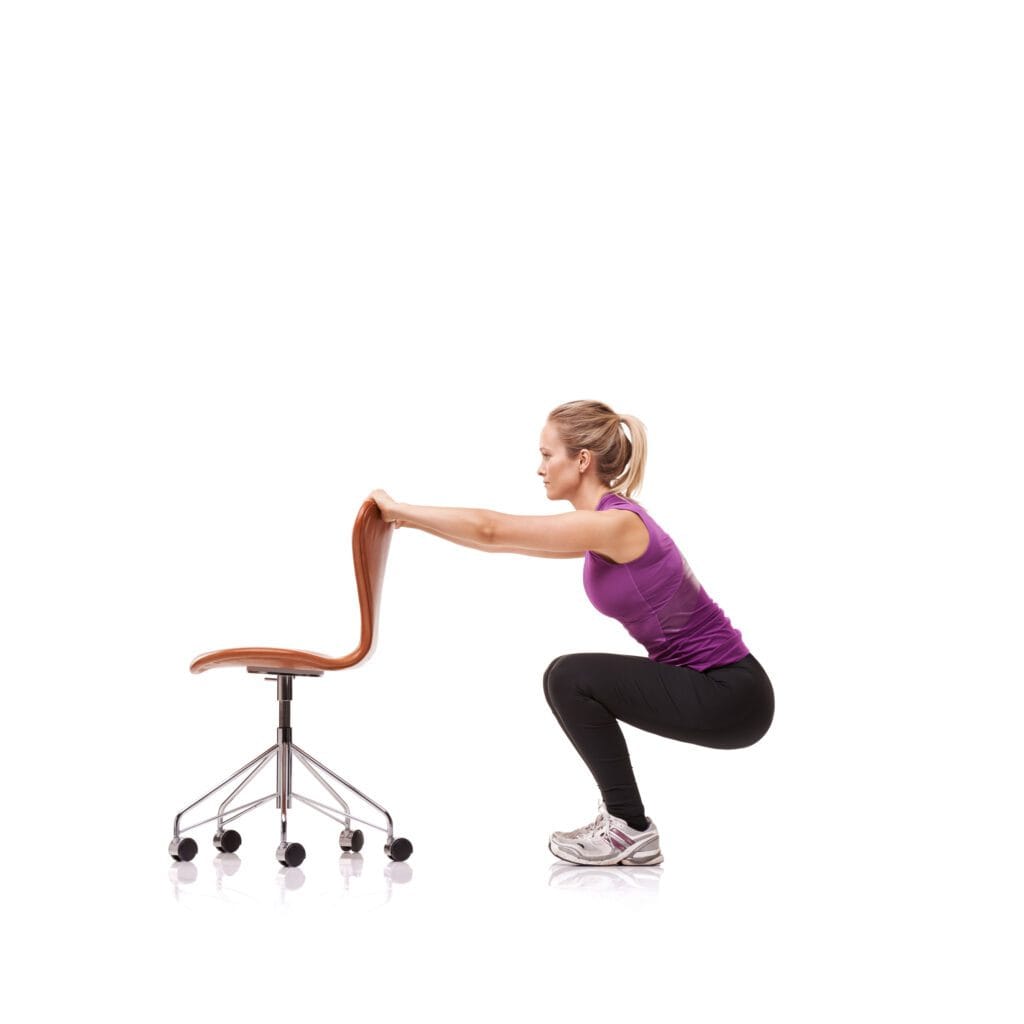
    4. Chair Squats

    chair squats while working from home

    I used to think you needed a gym to work your legs, but this exercise proved me wrong. Stand in front of your chair, slowly lower yourself down until you’re almost seated, then push back up.

    Do 10-15 reps to get your blood flowing. It works your thighs, glutes, and even your core. These desk exercises to stay active is also a great excuse to stand up and reset your posture during long work sessions. And trust me, your legs will feel the burn in the best way.

    5. Shoulder Rolls

    shoulder rolls from desk exercises

    Shoulder tension is the silent productivity killer, and this easy move helps shake it off – literally. Sit or stand tall, roll your shoulders forward in slow circles for 10 seconds, then reverse. I used to do this in my childhood for fun, not it has become a necessity.

    It sounds simple, but it releases built-up tension from stress or poor posture. I often do this when I’m reading emails or during meetings (obviously with no camera on). It’s a quick fix that improves posture and makes you more mindful of how you’re sitting throughout the day. Consider this your mini shoulder reset. 

    6. Ankle Pumps and Circles

    Ankle Pumps and Circles

    Don’t underestimate the power of your ankles. Sitting for hours reduces blood flow to your lower legs, which can cause swelling or stiffness. While seated, lift one leg off the ground and rotate your ankle clockwise and then counterclockwise at least 8-10 times. 

    Switch legs and repeat. You can also pump your toes up and down as if pressing a gas pedal. These desk exercises to stay active are sneaky but powerful. They help improve circulation and are a must if you tend to cross your legs a lot, like I do.

    7. Neck Tilts and Turns

    neck tilts and turns exercise from desk

    Nothing screams “desk fatigue” like a stiff neck. Start by gently dropping your right ear toward your right shoulder. Hold for a few seconds, then switch sides. Then slowly turn your head left to right like you’re scanning the room. These moves help reduce neck tension and realign your spine. 

    I like doing this while waiting for my coffee to brew or during long calls. It’s a great way to avoid tech neck and keep your upper body relaxed and mobile.

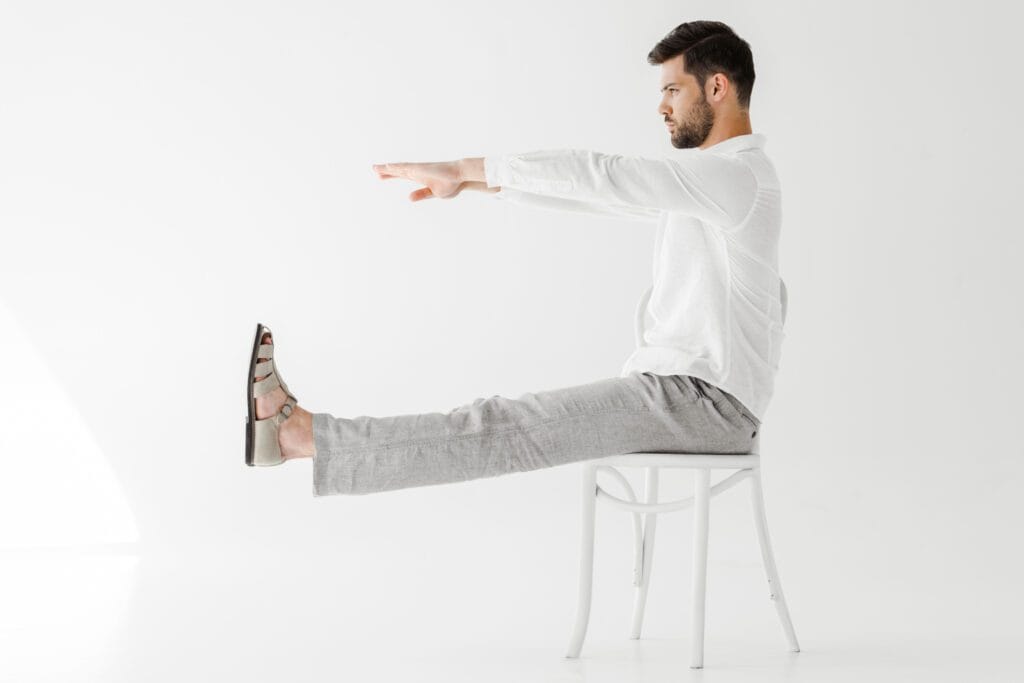
    8. Seated Leg Lifts

    Seated Leg Lifts exercise from desk

    Leg day at your desk? Yes, please. Sit tall, extend one leg out straight in front of you, hold for five seconds, and then lower it back down. Alternate between both legs for 10-12 reps. You can also pulse at the top to engage your thighs more. These desk exercises to stay active activates your core and lower body, improving strength and blood flow. 

    I often sneak these in while answering emails or doing some small tasks. It’s multitasking, fitness-style – no sweat (literally).

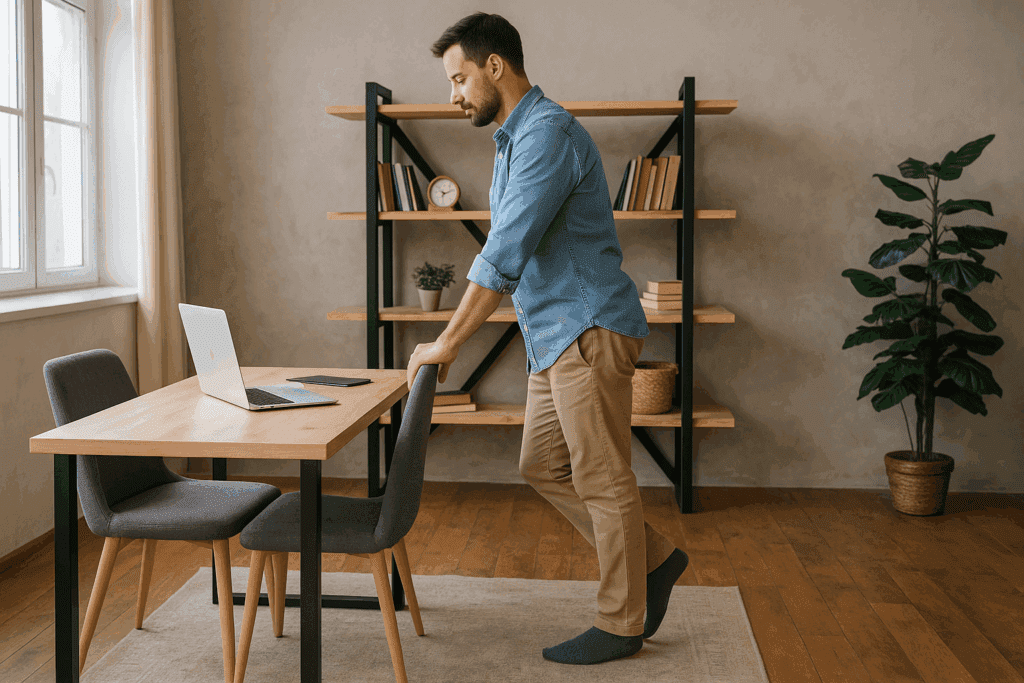
    9. Standing Calf Raises

    Standing Calf Raises

    You don’t need sneakers for this one. Just stand up behind your chair, hold the back for balance, and rise up onto your tiptoes. Hold for a second, then lower down slowly. Do 15-20 reps. 

    This simple move strengthens your calves, improves balance, and wakes up your legs after a long sit. I do them when I’m microwaving lunch or even while brushing my teeth (because why not?). It’s a fun, easy way to stay active with a desk job.

    10. Eye Breaks and Focus Shifts

    Eye Breaks and Focus Shifts

    Let’s not forget your eyes, they’re working hard too. The 20-20-20 rule is a lifesaver: every 20 minutes, look at something 20 feet away for at least 20 seconds. It helps reduce eye strain and keeps you from zoning out (we’ve all been there). 

    I pair this with a few slow blinks and some deep breaths to reset mentally and physically. It may not seem like a traditional exercise while sitting at desk, but it’s vital for staying energized and focused throughout the day.

    Final Thoughts About Desk Exercises To Stay Active

    Adding desk exercises to stay active into your daily routine isn’t about getting ripped at your desk. It’s about keeping your body moving, even in small ways, to feel relaxed. These movements are proof that a little goes a long way, especially when working long hours in front of a screen.

    From stretches to leg lifts and everything in between, these simple habits can seriously improve how you feel by the end of the day. So the next time your energy dips or your posture slumps, give one of these moves a try. 

    Subscribe to WhatWorksNext today and join a community dedicated to transforming the way we work. Working smarter starts here